

UX and CX are becoming increasingly important as brands search for a way to stand out. In addition, customers have become more demanding and have many online avenues to voice their frustrations with brands that do not meet their expectations. As a result, companies that best understand UX and CX and implement strategies focusing on customer satisfaction will continue growing faster than their competitors.
Firstly let’s clearly define UX and CX. UX means user experience, which refers to a user’s overall experience while interacting with a product or service. It encompasses all aspects of the user’s interaction with a company, its products, and its services. On the other hand, CX stands for customer experience, which refers to a customer’s overall experience with a company throughout the entire customer journey. CX includes all touchpoints with a company, from initial awareness to post-purchase support.
The goals of UX and CX are similar. They both aim to create a positive user experience, maximize product or service satisfaction, and build loyalty. When UX and CX exceed user expectations, customers can be strong advocates for a brand which is the ultimate goal of any company.

UX is essential to a company for several reasons:
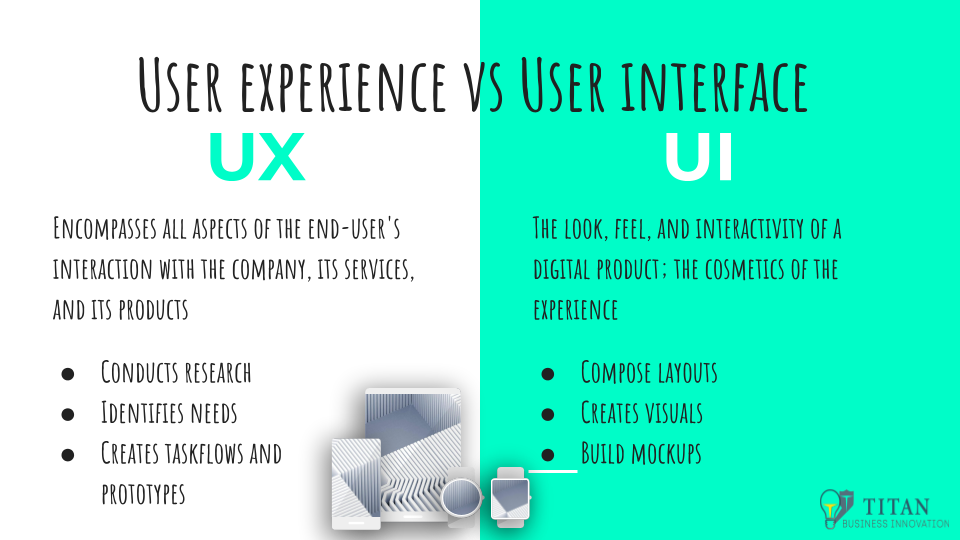
CX provides the following benefits to a company:
While UX and CX have some similarities, the main difference is their scope. UX is focused on the user’s experience with a specific product or service, while CX focuses on the overall experience with a company. UX is a subset of CX, as a good user experience is essential to a good customer experience.
How do UX and CX differ
While UX and CX have some similarities, they have different goals and approaches. UX is focused on the usability and design of a specific product or service, while CX is focused on creating a positive experience at every touchpoint along the customer journey.
UX designers need to understand user needs, behaviors, and preferences deeply. In addition, they need to be skilled in conducting user research, creating user flows and wireframes and designing interactions and visual elements that are intuitive and easy to use. Essential skills required for UX include:
CX professionals, on the other hand, need to have a deep understanding of the customer journey, from pre-purchase to post-purchase interactions. In addition, they need to be skilled in using customer insights and data to understand customer needs and preferences and in designing solutions that meet those needs at every touchpoint. Critical skills required for CX include:
By working together, UX and CX professionals can create a seamless and positive overall customer experience that meets the user’s needs and exceeds their expectations. Building a strong brand is vital in today’s marketplace, and implementing a UX and CX strategy working together will strengthen a company in both the short and long term.